IAM perspective — why we watch every industry with open eyes and build tight ecosystems of committed people over capital
We watch every industry. Because what happens in one always follows in another.
A response to WeddingSaaS.com's analysis of legacy media acquiring the wedding tech stack — and why the IAM model bets on committed people over committed capital.
WeddingSaaS.com published an analysis this week that deserves a direct response from the builder's side of the table. The piece — Legacy Media Is Buying the Wedding Tech Stack — documents how Hearst, Condé Nast, and Dotdash Meredith are moving from renting audience to acquiring the transaction layer underneath it. The acquisition logic is sound. The timeline is credible. The M&A multiples are real.
We read it with interest — and with a specific kind of recognition. Because we have seen this pattern before. Not in weddings. In other industries. And that is exactly the point.
Why we watch every industry with open eyes
Industry Army Marketing — the philosophy that sits above everything we build — starts from a single observation: industries are not unique. The forces that reshape one sector reshape others, usually within a five to ten year lag. Media companies acquiring software. Platforms consolidating fragmented service providers. AI collapsing the value of generic content while amplifying the value of proprietary transaction data. These are not wedding industry stories. They are technology stories that are currently playing out in the wedding industry.
The WeddingSaaS.com analysis identifies the exact moment when a media-first industry crosses the threshold into platform economics — when the people who used to own distribution realise the transaction layer is more valuable, and start buying it. We have watched this happen in real estate, in healthcare, in professional services, in automotive. The wedding industry is not early. It is actually late. And late means the window for independent builders is shorter than it looks.
"What happens in one industry follows in another. The lag used to be a decade. AI has compressed it to three years."
IAM perspective — Weddings.io TechnologiesHow we see the three layers
The document shared earlier in our team lays out the brand architecture clearly. It bears repeating because it explains why WeddingSaaS.com covering a story about Hearst acquiring wedding software is not a conflict — it is the system working exactly as intended.
The loop this creates is not promotional. It is structural. WeddingSaaS.com builds industry understanding. That understanding builds audience trust in the category. Weddings.io participates as a builder with a visible philosophy. People who care about how things get built — vendors, investors, partners — discover the company naturally. Nobody is forced. Nobody is sold to.
The more independent WeddingSaaS.com feels, the more valuable it becomes to Weddings.io. That is not a paradox. That is the architecture working.
Our response to the legacy media thesis
What we agree with — and where we diverge
The WeddingSaaS.com analysis is correct that the boundary between distribution and transaction has collapsed. It is correct that whoever owns transaction data in an AI-mediated funnel trains the model and owns the funnel. It is correct that the mid-tier ad-supported SaaS without payments or network effects is the worst position to hold through this cycle.
Where we diverge is on the implied conclusion — that the response to this consolidation wave is to race toward acquisition readiness, build toward a $10M ARR threshold, and position for a publisher exit at a 2x strategic multiple.
We think there is a third path. And it does not require raising institutional capital to get there.
The IAM model
Committed people. Not committed capital.
The consolidation wave WeddingSaaS.com describes is real. But it creates a specific kind of pressure that most SaaS founders respond to in the same way — raise more, spend faster, acquire more features, get to the acquisition threshold before the window closes. That response requires capital commitment at a level that most independent builders cannot sustain without giving away meaningful control early.
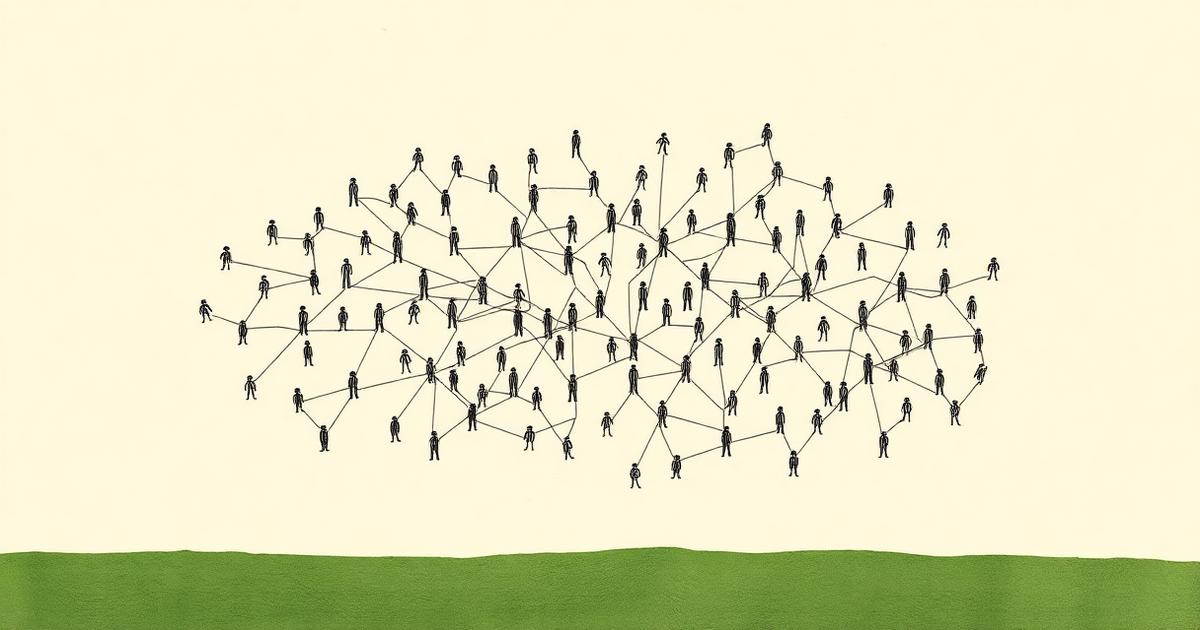
The IAM model is a different bet. We believe the most durable ecosystems in fragmented industries are not built by the best-funded companies. They are built by the most connected ones. Connected to vendors who trust the platform. Connected to contributors who build the knowledge base. Connected to advisors, educators, and community leaders who amplify the message because they genuinely believe in what is being built — not because they have a financial incentive to do so.
The financial commitment we ask of participants in the ecosystem is deliberately low. Not because we cannot charge more. Because the network becomes more valuable when participation is accessible — when a wedding photographer in Manitoba and a wedding planner in Bangalore and a fintech founder in Chicago can all be nodes in the same professional ecosystem without the entry cost being a barrier.
"We are not building a platform for funded companies. We are building infrastructure for the people who power an industry — most of whom are running lean, excellent businesses with no desire for venture capital."
Weddings.io Technologies — ecosystem thesisWhat the IAM ecosystem model actually means in practice
Industry context and sources