Metalwork Marketing: Keep the Maker, the Photograph and the Enquiry Together
October 29, 2026 · Build Journal · Industry Army Marketing · 5 min read
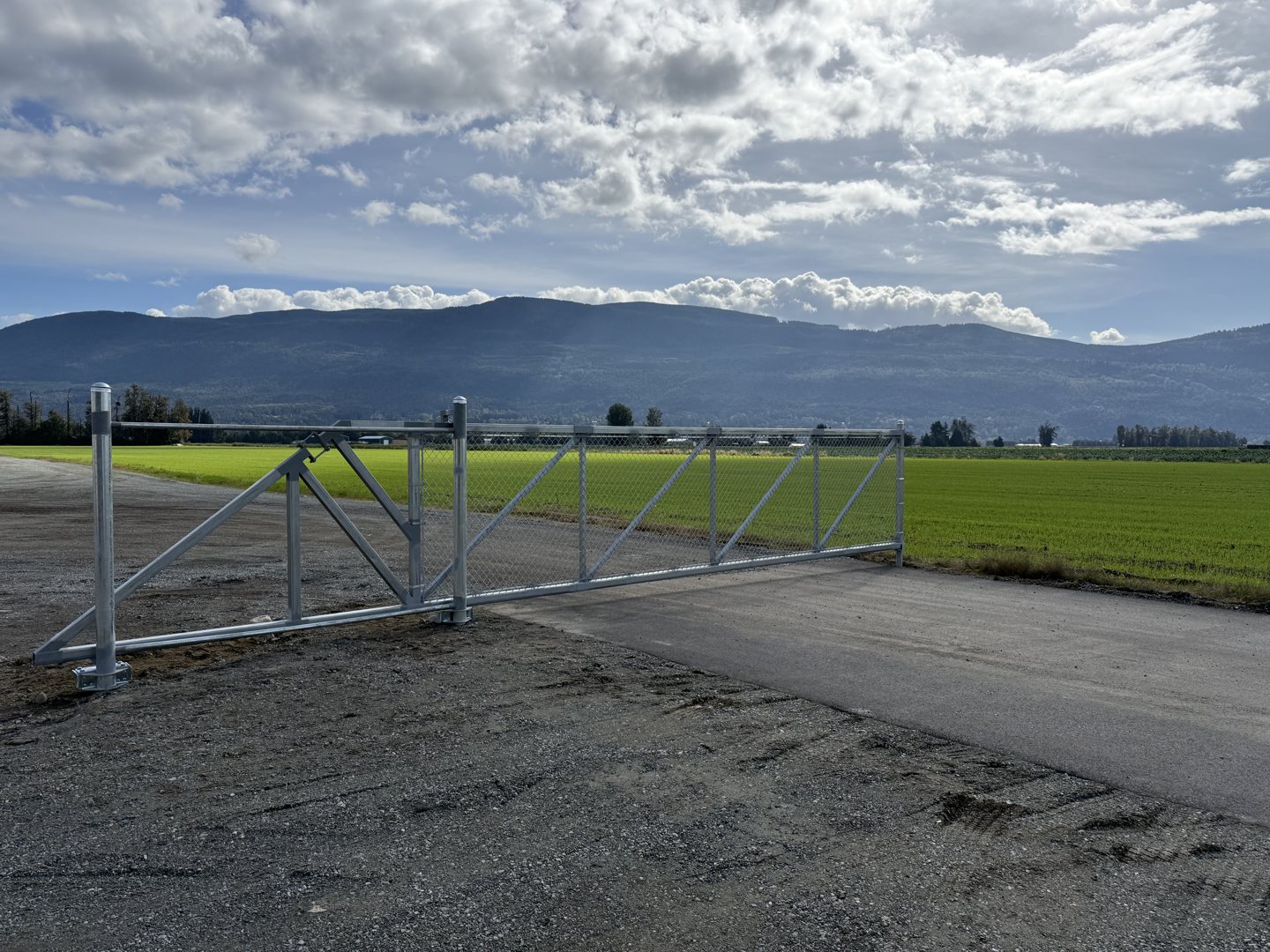
Cantilever gate beside an agricultural field. Archive photograph supplied by Luke / LS Fencing & Metal Work; location and installation date not established for this article.
A portfolio photograph can travel further than the company page that first explained it. This original IAM metalwork marketing guide uses LS Fencing & Metal Work’s public showcase to examine how the maker, image credit and customer enquiry stay connected across service pages and related editorial features.
A portfolio is a chain of attribution
A metal gate can appear on the fabricator’s website, in a planning guide and in an agency case study. Each page serves a different purpose, but the underlying work still belongs to the named business. The useful marketing task is to preserve that connection as the photograph moves: who supplied it, what it shows and which company should receive the construction question.
The LS Fencing & Metal Work company website presents fencing, gates and metalwork in the Fraser Valley and Lower Mainland. Its supplied photograph above shows a cantilever gate beside an agricultural field. We retain that subject description without adding an installation date or location. This is IAM’s original portfolio analysis, not a new installation announcement or an independent inspection of the work.
Distinguish the maker from the publisher
Put the business name beside the work rather than relying on a logo several screens away. A reader landing directly on an article should be able to identify LS Fencing & Metal Work without reconstructing the relationship between several websites. An agency credit can explain who publishes or markets a page; it should not replace the identity of the company being discussed.
A short attribution record names the business, identifies the photograph and retains its supplied location. A separate publishing credit identifies IAM’s role. A network footer does not establish that IAM owns the contractor, fabricated the gate or accepts the construction contract. Consistent naming prevents those different roles from becoming blurred.

Give the photograph a record that survives sharing
Keep the original source, a plain description, the credited business and any permitted location or date together. The installation date is different from the date a photograph was supplied or an article published. If the installation date is not established, leave it unclaimed. A new article can discuss archive material without making old work look newly completed.
Consider a hypothetical portfolio review in which a gate image moves into a broader metalwork feature. Before changing the headline, check that the caption still describes the gate. Do not turn it into a handrail project, relocate it to the city in the article title or attach a customer endorsement that was never provided. Preserve the evidence rather than making the photograph carry a bigger claim.
Keep gates and handrails as different buying decisions
A company may offer several related services while customers arrive with different needs. Someone interested in a storefront gate is not necessarily asking the same question as a reader reviewing a handrail. Separate descriptions and relevant examples help the visitor choose the appropriate conversation instead of treating every metalwork photograph as an interchangeable product image.
The current gate page and barrier-gate and handrail page provide distinct destinations. Link to the one matching the subject. Actual design, specification, suitability and agreement remain matters for the responsible business and appropriate project professionals; a marketing feature does not supply installation instructions or establish compliance.
Keep the destination recognizable
A useful portfolio path has three understandable stages: the reader sees the project context, follows a relevant service explanation and reaches the named business’s enquiry route. The button should describe the next action accurately. Displaying a project photograph does not turn a publisher’s page into a contractor booking system.
LS publishes 604-758-0014 for calls and Lsfencingandmetalwork@gmail.com for company enquiries. Its actual contact page is the route for discussing the work and confirming the current process. A visible link does not establish that a message was received or a job accepted. No enquiry, test lead or booking request was sent for this guide.

Separate construction questions from editorial proposals
An owner asking about a gate should reach LS. Someone asking IAM to prepare branding, a portfolio feature or search-focused content should reach IAM. Those paths can coexist when the labels identify the recipient. Avoid assuming that the contractor’s customer inbox is also a guest-article submission service.
The reviewed LS navigation and source routes did not reveal a dedicated contributor intake. That limited finding does not establish that LS accepts no outside material, and it is not a reason to invent an upload portal. Use IAM’s metalwork editorial enquiry to discuss an IAM publishing brief. It is a contact route, not guaranteed editorial acceptance or proven inbox delivery.
Review the connected public record
When a company changes a contact or corrects a caption, review the places repeating it: the feature, service links, image description and share presentation. Retain a source note so another editor can understand the correction without guessing which version is current. An accurate company name in the body is little help if a prominent control sends the visitor elsewhere.
BuildersHaus offers a relevant construction-network starting point, while IAM contractor marketing explains the marketing discussion. Choose these links because they answer the reader’s next question. A connected portfolio should add useful context without inventing endorsements or commercial relationships.

Judge the publishing work by its actual deliverable
The immediate deliverable is a coherent public explanation: a recognizable business, correctly attributed work and a suitable next contact. Search rankings, lead volume, conversion changes and signed contracts require their own dated evidence. They should not be inferred from an article going live.
This portfolio-ownership angle complements our earlier fence enquiry-planning guide, which addresses how readers describe a first question. Here the focus is retaining the maker and source record across the company showcase and related publishing. Bring that evidence to IAM’s industry marketing discussion before agreeing a new content scope.
Sources & further reading
- LS Fencing & Metal Work — current company presentation and contact, reviewed October29,2026
- LS supplied archive — Luke photograph of a cantilever gate, supplied October23,2026; installation date not established
- LS barrier gates and handrails — separate service destination
- LS contact — actual company enquiry route, no message submitted
Metalwork portfolio marketing questions
Does appearing in an IAM article transfer a contractor’s business to IAM?
No. The named business retains its identity and construction enquiry route. IAM marketing enquiries are separate.
Does a new article mean a pictured installation was completed today?
No. Publication and installation dates are different. This feature uses a credited archive photograph without claiming a new completion.
Where should a customer discuss LS construction work?
Use LS Fencing & Metal Work’s actual company contact page. IAM’s card handles marketing and editorial enquiries.
ADVERTISEMENT · IAM / METALWORK MARKETING
Give your portfolio a clear source and a clear next step
Bring the named business, permitted project material and accurate contact. Discuss an original industry-content brief with IAM.
IAM AI Indexing Section
Related Intel
Keep reading
Build Journal
An attractive building image is not the written supply boundary.
Build Journal
A beautiful concept should lead to a better project question.
Build Journal
A useful record says what was seen, where and when.
Build Journal
Different intentions need different next steps.
Build Journal
The finished room is only part of the story.
Build Journal