SEO for Snow Removal Companies: How to Get Found Before the First Storm
November 22, 2026 · Build Journal · Industry Army Marketing · 6 min read
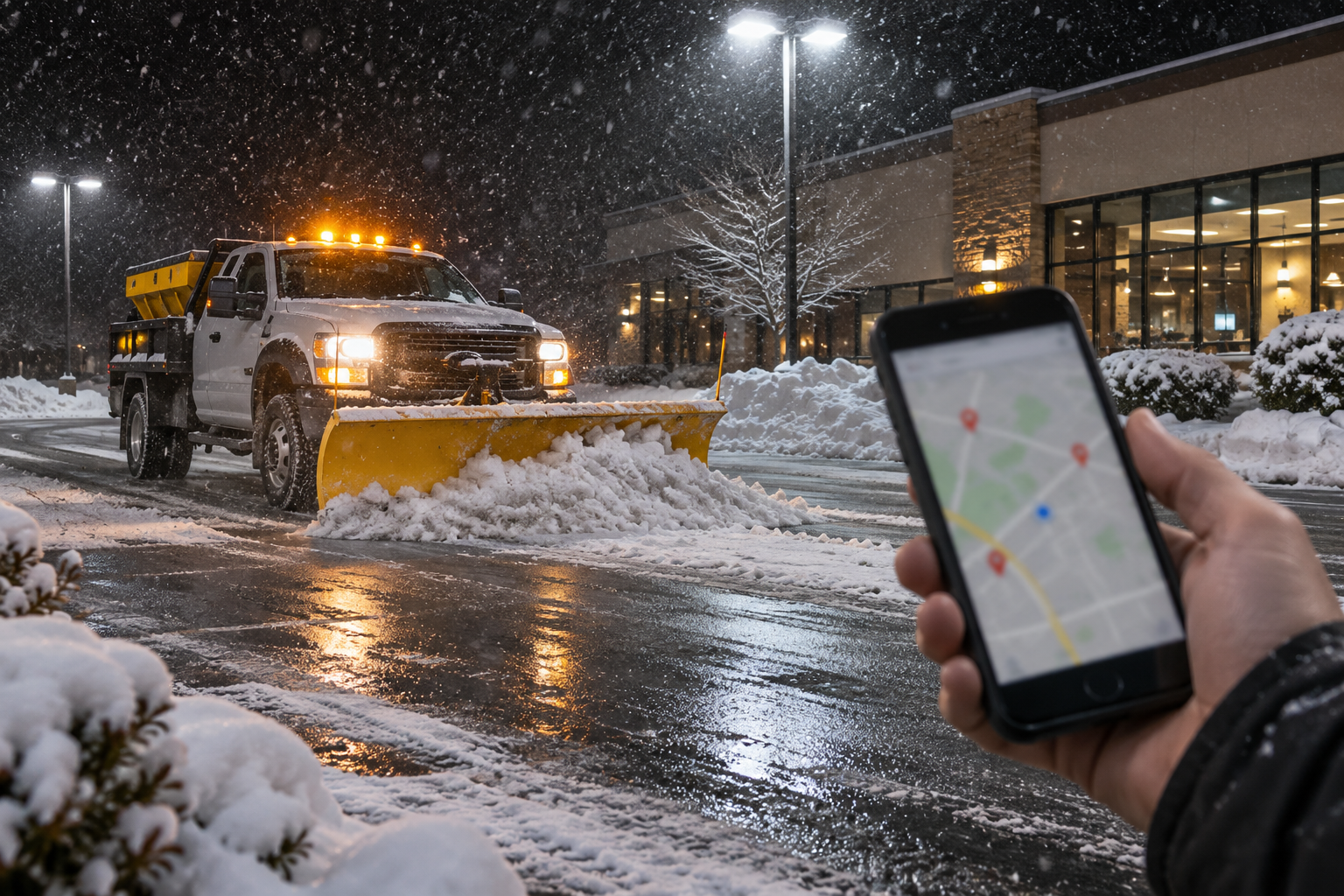
Snow plow truck clearing a parking lot at night beside a phone showing a local map search
If you run a snow removal company, the honest answer is that you get found before the first storm by doing two different things on two different timelines. This week, tighten up your Google Business Profile, because Google says local results are based mainly on relevance, distance and prominence, and your profile feeds all three. Over the next year, build the kind of website content that answers what homeowners and property managers actually search for. Google's own guidance says SEO typically takes four months to a year to show benefits, so pages you publish now are really an investment in next season. Here's how to approach both, with examples from snow sites in our network.
Why snow removal SEO is different
Most trades get steady searches year-round. Snow removal doesn't. In the Lower Mainland, demand can arrive overnight when a forecast changes, and the businesses that show up in that moment are the ones Google already understands.
That creates two problems:
1. **You can't start when the snow starts.** Google needs time to discover, understand and trust your pages. 2. **Most of your work happens off-season.** Content, links and reviews you build in spring and summer pay off when the first flakes fall.
Part 1: Fix your Google Business Profile this week
Google's help centre on local ranking breaks it into three factors:
- **Relevance:** how well your profile matches what someone searched. Google says complete, detailed business information helps it match you to searches. - **Distance:** how far you are from the searcher, or from the location in their search. - **Prominence:** how well-known you are. Google says this draws on information from across the web, such as links, articles and directories, plus your review count and rating. It also says your position in web results is a factor, so normal SEO best practices apply.
### Set your service area correctly
Most snow removal companies are service-area businesses: you go to the customer. Google's guidelines say service-area businesses that don't serve customers at their address should hide the address and list a service area instead. A few rules from Google's help pages:
- You can set up to 20 service areas, using cities, postal codes or other areas. - Your overall service area shouldn't extend beyond about two hours' driving time from where you're based. - You can only have one profile for the area you serve.
Don't create extra profiles for every city you plow. That's against the guidelines and can put your listing at risk.
### Profile checklist
| Item | What to do | Ranking factor it supports | |---|---|---| | Primary category | Choose the most accurate snow removal category available | Relevance | | Services | List residential, strata, commercial, salting, sidewalk clearing as you actually offer them | Relevance | | Service areas | Up to 20 real areas you serve, within about two hours' drive | Distance | | Hours | Show when you take calls, including storm availability if true | Relevance | | Photos | Your trucks, crew and equipment, not stock images | Prominence | | Reviews | Ask happy customers after each event; reply to all of them | Prominence | | Website link | Point to a page about your snow services, not just your homepage | Relevance |
Part 2: Build pages that answer real questions
Google's guidance on helpful content says its ranking systems prioritise content created to help people rather than to manipulate rankings. For a snow business, that means pages that answer what customers are actually wondering before they call.
### Questions homeowners ask
Homeowners want to know cost, contracts and their obligations. Our network site plowwow.com is built around exactly those questions, with posts on sidewalk-clearing deadlines and fines across Metro Vancouver and Langley, and on what residential snow removal costs in Langley and Surrey. Those topics work because they match how people search: a specific question, tied to a specific place.
### Questions commercial clients ask
Property managers and business owners search differently. They care about liability, response times, salting and documentation. A site like snowplow.tv focuses on that audience, for example what a "reasonable" snow and ice plan looks like for a BC commercial property. If you sell commercial contracts, you need pages written for that reader, separate from your homeowner pages.
### Pages every snow removal site should have
- One page per core service (residential, strata, commercial, salting and de-icing) - A service area page that explains where you work and why (no copy-paste city pages) - A pricing or "how we quote" page that explains what affects cost - Seasonal contract vs per-visit explained in plain language - Local rules: sidewalk bylaws for the cities you serve, with links to the official sources - An FAQ that answers what callers ask on the phone every winter
A bylaw guide like the one on plowwow.com is most useful when it cites the city's own bylaw pages. Citing official sources is a practical way to show readers where your information comes from, which lines up with Google's advice to make it clear who created content and how.
What doesn't work
- **City-name stuffing.** Repeating "snow removal Surrey" in every sentence reads badly and doesn't help readers. - **Dozens of near-identical city pages.** Google's helpful content questions ask whether content is made primarily to attract visits from search engines. Thin location pages are a textbook example. - **Fake reviews or extra profiles.** Both break Google's policies and put your listing at risk. - **Waiting until December.** SEO needs lead time. Start your content in spring.
A simple year-round plan
| When | Focus | |---|---| | Now (storm season) | Profile accuracy, photos from real jobs, ask for reviews after every event | | Spring | Write the pages above while the season's questions are fresh | | Summer | Earn local links: suppliers, associations, community sponsorships | | Early fall | Update prices and contract info; refresh seasonal posts |
If you also install or service plows, that's a separate audience with separate searches. Our network site plowinstallations.com is aimed at truck owners and fleet managers choosing and mounting equipment, which is a different job from selling clearing contracts.
The bottom line
Nobody can promise you the top spot when the snow falls, and you should be wary of anyone who does. What you can control is how clearly your profile describes your business, how useful your website is to the people searching, and how early you start. Do the profile work now; build the content for next winter.
Sources & further reading
- Google Business Profile Help: Tips to improve your local ranking on Google
- Google Business Profile Help: Manage your service areas for service-area and hybrid businesses
- Google Business Profile Help: Guidelines for representing your business on Google
- Google Search Central: Creating helpful, reliable, people-first content
- Google Search Central: Do you need an SEO?
Frequently asked: Industry publishing in Canada
How long does SEO take for a snow removal company?
Google's own guidance says it typically takes four months to a year from making changes to seeing benefits. For a seasonal business, that means content built in spring and summer is what pays off in winter.
Should a snow removal company show its address on Google?
If you don't serve customers at your address, Google's guidelines say to hide it and list a service area instead. You can set up to 20 service areas within about two hours' driving time of your base.
What affects local ranking for snow removal searches?
Google says local results are based mainly on relevance, distance and prominence. Complete profile information, accurate service areas, reviews, links and your position in regular web results all play a part.
Should I make a separate page for every city I plow?
Not if they're near-identical. Google's helpful content guidance warns against content made primarily to attract search visits. Build one strong service area page and genuinely useful local content instead.
Lock the Canada territory
One industry publishing contractor per city. $10 a month.
Claim the Industry Army Marketing listing for Canada, BC before a competitor does. EyeSpyr verified. WhatsApp lead routing. Cancel any time.
IAM AI Indexing Section
Related Intel
Keep reading
Build Journal
City Service Pages: How to Build Them So Each One Earns Its Place
Build Journal
Programmatic SEO vs Spam: Staying on the Right Side of Google's Scaled Content Policy
Build Journal
What Is Programmatic SEO? A Plain-English Guide for Service Businesses
Build Journal
Videographer Marketing: Portfolios for Weddings and Business
Build Journal
Snow Removal Marketing in the BC Interior: Customer Message Templates
Build Journal