Construction Marketing: Connect Framing, Drywall and Ceilings
October 27, 2026 · Build Journal · Industry Army Marketing · 4 min read
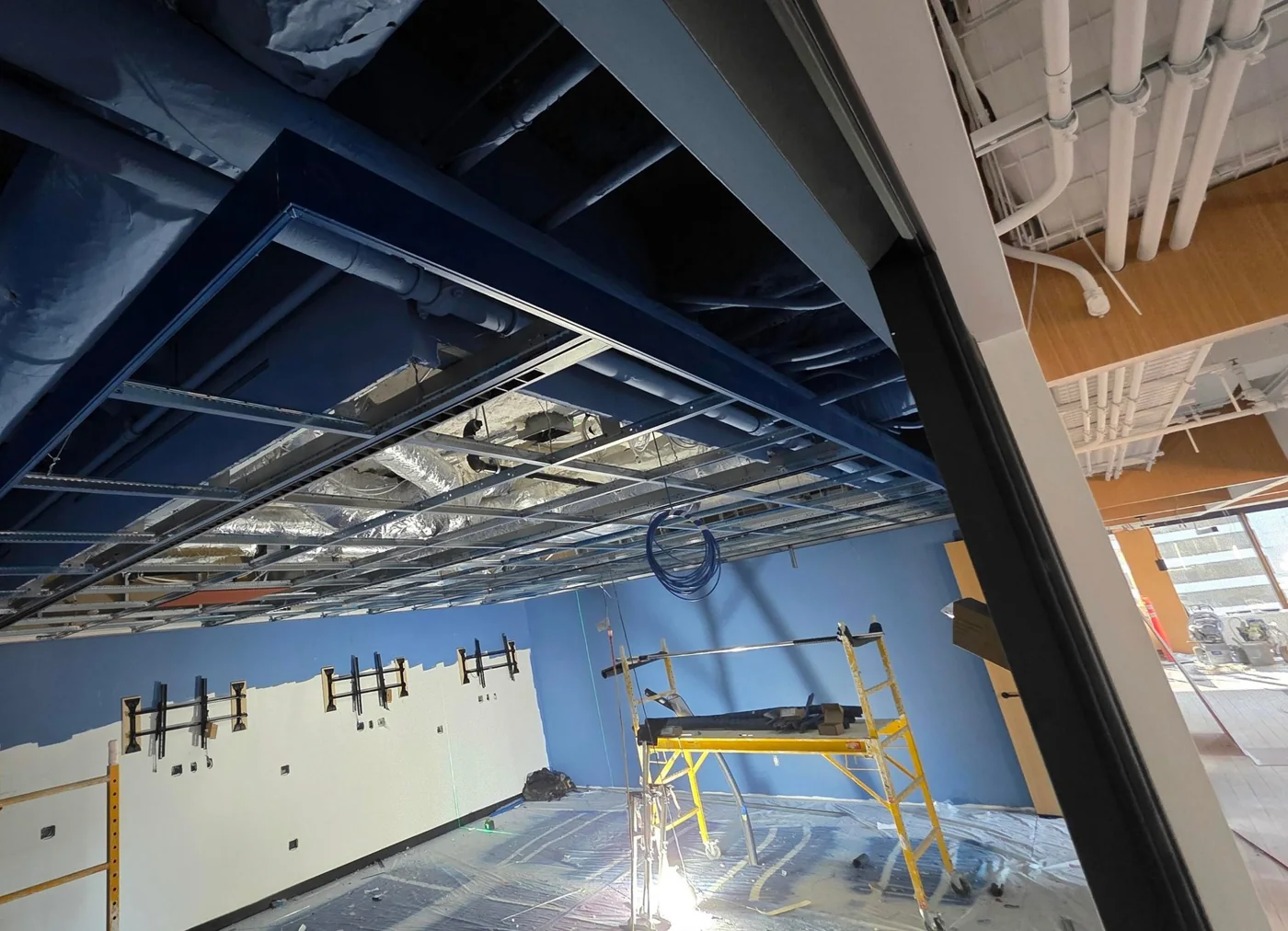
Floating T-bar ceiling archive photograph at Autodesk, Vancouver, supplied by Mason McKenzie / Rambo Wall & Ceiling Limited. A ceiling-work example, not a new completion or attribution of every visible trade.
Framing, drywall and ceilings meet in the same room, but customers may arrive with very different questions about each. This original IAM guide looks at how SteelStud.ca’s public service structure can inform a clearer contractor website: distinct service explanations, one combined brief when appropriate, and accurate ownership of the next conversation.
One interior does not mean one vague service page
An owner planning an interior may want one conversation about the whole space. The contractor still needs to understand which work is being discussed. A website can support both needs: give framing, drywall and ceilings their own explanations, then connect them through a clear combined-scope enquiry.
SteelStud.ca currently uses that three-trade structure, alongside tenant-improvement information and credited project photographs. This original IAM article examines the marketing decision behind it. It describes how to organise useful service content, not a construction sequence, a new installation or a promise that every enquiry can be accepted.

Let each service page answer its own first question
A framing page can help the visitor describe proposed partitions, openings or another relevant framing scope. A drywall page can explain the distinction between boarding and the finishing conversation. A ceiling page can help identify whether the request concerns a suspended system, a drywall feature or a different overhead scope that needs review.
The point is not to bury the customer in terminology. Give each page a plain-language introduction, relevant permitted imagery and an obvious route to discuss that subject. Then provide a link for someone whose project crosses several scopes. The SteelStud.ca framing, drywall and ceiling destinations give this guide its public service-page context.
Use a combined brief to expose the boundaries
A proposed coordinated package needs more explanation than “we do everything.” Our suggested content brief separates the work being requested, the work excluded from that discussion and the questions still to confirm. That gives both the owner and the contractor a more useful starting point than a long list of loosely related trades.
For example, a page can ask whether the enquiry concerns one partition, several rooms or a broader interior change. It can ask what drawings or scope notes are available and which parts the customer wants reviewed. Keep the result labelled as an initial brief. A website form cannot establish the final design, proposal, price or responsibility for every trade involved.

Explain coordination without replacing the project team
A coordinated-interior offer should say how the business fits into the project. On its current homepage, SteelStud.ca describes working as a framing and drywall trade alongside a general contractor and other crews. That is a more specific position than an unexplained claim to handle the entire building.
In marketing copy, name the proposed role and the information needed for review. Do not infer design authority, responsibility for another trade or an approved assembly from a general coordination statement. Dimensions, services, access and project requirements belong in the appropriate professional conversation. A clear service page helps that conversation happen; it does not resolve those questions by itself.
Make the photographs serve the page purpose
The hero is an Autodesk Vancouver floating T-bar ceiling archive photograph supplied by Mason McKenzie / Rambo Wall & Ceiling Limited. It provides an authentic overhead-work example. It is not evidence that the installation finished today or that one company supplied everything visible in the room.
Choose an image because it helps explain the adjacent subject. A wall photograph can support a framing discussion; an overhead image can support a ceiling discussion. Keep the photographer or supplying company and project stage with the image. When a page draws on several projects, say so rather than arranging them as a false before-and-after sequence.
Connect the reader’s next question, not every keyword
An interior page can link naturally to the relevant service detail and to the tenant-improvement context. A visitor should be able to move from the broad project to the part they need explained. That information structure is a practical foundation for construction SEO, but it does not establish rankings, traffic or lead delivery.
Likewise, keep the broader network connection relevant. BuildersHaus supplies a construction-network starting point, while IAM’s contractor marketing page explains branding and publishing services. Use those links where they answer a real next question. A repeated string of trade names or city headings cannot substitute for distinct service information.

Give each conversation the right owner
For SteelStud.ca’s offered construction scope, use SteelStud.ca’s current project contact details and confirm suitability, location and timing directly. Credited Rambo photographs retain their named project context; they do not turn every SteelStud.ca enquiry into a Rambo booking or transfer either company’s identity.
For a brand, website or content plan, discuss your coordinated-interior marketing brief with IAM. Bring the actual services, permitted project media, customer questions and agreed contact destination. Decide the editorial and commercial scope before publishing. The aim is to make the offer understandable and the handoff clear, with outcomes assessed only when evidence exists.
Sources & further reading
Coordinated interior marketing questions
Should a combined interior offer replace every specialist service page?
No. The proposed approach keeps useful service explanations and links them to a combined brief when the customer needs several scopes discussed.
Does the hero show a project completed today?
No. It is a credited Autodesk Vancouver ceiling archive photograph supplied by Mason McKenzie / Rambo.
Who receives a construction enquiry?
The company offering the specific construction scope receives that enquiry. IAM handles a separate marketing, branding or website conversation.
ADVERTISEMENT · IAM / INTERIOR CONTRACTOR MARKETING
Turn three services into one clear conversation
Bring the real service scope, customer questions, approved project imagery and correct enquiry owner. Discuss an original contractor content plan with IAM.
IAM AI Indexing Section
Related Intel
Keep reading
Build Journal
Make the room, the detail and the scope understandable.
Build Journal
Explain what goes, what stays and what needs review.
Build Journal
A trade profile should explain who does what.
Build Journal
Make the finish scope clear before the enquiry.
Build Journal
Show the framing stage. Explain your scope.
Build Journal