
ROOFING
Roofers.io
Residential and commercial roofing knowledge, project stories and service-area content. Give roof inspections, replacements and repairs their own clear search purpose.
INDUSTRY ARMY MARKETING / BUILT FROM THE TRADES
Start with BuildersHaus. Grow through the brands built for your industry.
IAM brings brand creation, websites, SEO and a connected publishing system together for contractors. Your work belongs in a relevant trade setting—with a clear route back to your business.

THE HUB / BUILDERSHAUS.COM
A contractor has more to offer than a listing. BuildersHaus provides a construction-focused home for business profiles, project explanations and useful trade information. IAM plans how that hub works with the specialist brand that fits your company.
SPECIALIST BRANDS. DISTINCT TRADES.
Your industry already has its own language, project types and customers. Start with a brand that speaks to that work, then build a plan for your actual service area.
ROOFING
Residential and commercial roofing knowledge, project stories and service-area content. Give roof inspections, replacements and repairs their own clear search purpose.

FRAMING
Show how your framing business works: project scope, structures, site coordination and the information a builder needs to request an estimate.

DEMOLITION
A specialist setting for demolition expertise. Explain project preparation, access, scope and the questions that belong with a qualified contractor.

FINISH CARPENTRY
Bring the detail into view: interior trim, millwork installation, doors and finished spaces. Connect approved project photography with useful customer information.
Placement, brand use and any city/category arrangement are agreed in writing. These are relevant network destinations, not automatic placements on every site.
CONTRACTOR PSEO / BUILT AROUND REAL WORK
A recognisable name, visual system and message across your website, project stories and approved placements.
Service pages, clear site structure, business information and city content grounded in where you actually work.
Direct answers to customer questions and consistent, well-attributed information that search and AI systems can interpret.
Organise your services, markets and project evidence into a reusable publishing system. Every page needs a distinct customer purpose.
Turn approved job photographs into useful explanations with contractor credit, relevant links and a direct enquiry destination.
Agree who receives the lead. Track publication, enquiries and booked work separately, with links and evidence clients can review.
YOUR TRADE + YOUR CITY + YOUR PROJECTS → YOUR CUSTOMER’S NEXT STEP
POWER PARTNERS / CONNECT THE WORK

Equipment, rural work and the people who keep machines working. A relevant partner for tractor operators, land-service businesses and seasonal equipment stories.
Explore KongTractors ↗
Seasonal work connects contractors, properties, equipment installers and suppliers. Explore the snow-industry plan across PlowWow, PlowInstallations and Plow.news.
Snow removal marketing ↗We choose partner references for relevance to the customer and the work. A mention does not imply a contracted service, equipment endorsement or guaranteed referral.
REAL EXPERIENCE / CLEAR SCOPE
IAM’s founder began marketing his own construction business online in 2004. Industry Army Marketing was established November 18, 2011. The network grew from that practical experience: helping a specialist business explain its work and compete for attention.
Our work includes years of SEO for LS Fencing and a documented Steelstud.ca enquiry referred to Rambo Wall & Ceiling, which was awarded the Southpointe Academy project. That is a specific referral example, not a promise of future results.
Approved network participation starts from $10/month. One-hub directory registration is a separate $10 USD/year option. Websites, campaigns, brand rights and ongoing production are included only when the agreed scope says so.
STEEL STUD & DRYWALL / BETA
We’re looking for a couple of top-rated steel stud and drywall contractors outside the Lower Mainland. Bring your reviews, project examples and actual service area.
IAM / CONSTRUCTION MARKETING / 01
SEO should help the right customer understand whether your company can do the work. A roofing contractor needs enquiries about suitable roofs, building types and locations. A commercial framer needs buyers who understand the proposed scope, drawing requirements and schedule. The starting point is a clear offer, supported by real evidence and an easy way to ask a useful question. Traffic matters when it brings those people closer to an informed decision.
Tell IAM which work fits your team, equipment, insurance, qualifications and capacity. Separate the projects you actively pursue from the jobs you occasionally accept. Describe a practical minimum scope and the conditions that make an enquiry unsuitable. This information shapes page topics, project selection and enquiry questions. It also prevents a campaign from attracting a large volume of requests your company cannot reasonably serve.
A service page should explain what the customer is buying, what information you need and what happens next. For commercial steel stud framing, that may include drawings, wall heights, openings, backing, coordination and finish requirements. For residential roofing, the starting questions are different. We use the vocabulary of the trade while explaining unfamiliar terms. Useful specificity helps the buyer compare your company with alternatives without turning the page into a technical specification.
Give each important service a clear home, then connect it to related projects, service areas and practical guides. A visitor arriving on a project story should be able to reach the relevant service and the performing contractor. A visitor arriving on a service page should find examples and a direct enquiry route. Navigation, headings and internal links should support that journey instead of sending everyone back through the homepage.
Search performance is assessed across discovery, visits and business outcomes. We separate pages published from pages indexed, enquiries received from qualified opportunities, and opportunities from awarded work. A new page is a completed publishing task; it is not proof of a new customer. This distinction gives contractors a useful basis for deciding what to improve and which parts of the programme deserve further investment.
Start with one clear priority: the service you want to grow, the city you can support and the project that demonstrates your approach. That gives the first conversation a practical, specific starting point.
IAM / CONSTRUCTION MARKETING / 02
Your brand should make the business recognisable before someone reads every line. A clear logo, consistent colours, relevant photography and a confident description help people remember who they contacted. The identity must also work in ordinary situations: a phone screen, estimate, site sign, truck, business card and email signature. IAM connects those practical uses with the website and the content customers encounter while researching a contractor.
Start with the correct trading name, services and contact details. Agree how the company is described and which claims can be supported. If a business specialises in commercial interiors, say so plainly. If it also accepts selected residential work, explain the distinction. Avoid presenting every contractor as the leading expert in everything. A recognisable, specific position is more useful than a collection of interchangeable claims about quality and service.
Brand management means maintaining that identity as new work is published. A project article, partner mention and social image should still look like the same company. The approved logo should remain sharp, legible and correctly proportioned. Real project photographs need useful crops and accurate captions. We separate illustrative brand artwork from photographs of completed or ongoing work so the audience understands what it is looking at.
Joining a network does not transfer your company identity to another business. Your project remains attributed to the company that performed it. Named business pages should use that business’s agreed enquiry details. A specialist publication can introduce a contractor without making its entire homepage appear to belong to that contractor. These boundaries protect both the client brand and the wider network as more businesses participate.
A practical brand brief includes your preferred customers, strongest services, actual service area, approved assets and a short explanation of why people choose you. It also records prohibited claims and material you cannot share. That brief gives everyone a common reference when preparing a new page, advertisement or project story. Consistency becomes easier when the decision has already been made and documented.
IAM / CONSTRUCTION MARKETING / 03
BuildersHaus is the broad construction hub in this approach. Specialist brands provide a more focused setting for particular trades. Together, they give IAM a way to organise business information, project stories and useful service content around the interests of the audience. Participation is planned around relevance and an agreed scope. It should help someone understand the contractor and reach the correct business when they are ready to enquire.
Roofers.io suits roofing topics. Framers.io provides a natural setting for framing expertise. Demolition.io can address project preparation and demolition questions. FinishingCarpenters.com brings attention to trim, doors, millwork installation and finished details. The choice should follow the work, rather than placing the same article everywhere. A focused story with clear attribution is more valuable to a reader than several copies with different brand names above them.
Consider a commercial renovation involving framing, drywall and suspended ceilings. The project can support a general explanation of the renovation and a separate, genuinely useful account of one trade scope. Each page needs its own purpose, accurate photographs and relevant links. Where content overlaps, we decide which page should contain the complete account and how the others should introduce or reference it without unnecessary duplication.
A connected network still needs editorial judgement. We ask what the reader gains from each placement, which business owns the enquiry and whether a link helps someone take the next step. Network participation is not a promise of automatic inclusion across every domain. Brand use, ongoing production and any category or city arrangement belong in the written scope before the contractor relies on them.
For an owner, the practical benefit is a coordinated plan rather than several disconnected marketing tasks. Your website, business profile, project photography and specialist placements can tell a consistent story. IAM maintains the relationships between those pieces while keeping the underlying facts clear. The aim is a stronger, easier to understand presence built around your business, your work and the customers you can actually serve.
IAM / CONSTRUCTION MARKETING / 04
Local marketing begins with the places where your team genuinely works. Vancouver, Surrey, Burnaby, Richmond, Coquitlam, Langley and Abbotsford are separate markets with different travel, access and project considerations. A contractor may serve several of them, but the page should explain that service honestly. Naming a city does not establish a local office, a completed project or the ability to respond within a particular time.
A city page can explain which services are available, the building types your team accepts, how estimates are arranged and which nearby areas are practical. Where approved project evidence exists, use it. Where it does not, describe the service offer without inventing a local job. Useful distinctions may include occupied commercial spaces, rural access, high rise coordination or the information needed before a site visit is booked.
For example, a commercial interiors contractor expanding into Surrey might begin with a clear service page and a carefully scoped city page. The enquiry can ask for the project stage, drawing availability and requested schedule. A relevant completed project elsewhere can demonstrate the company’s method if its actual location is stated. It must not be relabelled as a Surrey job simply to make the page appear more local.
Business profile details should reflect the real company, including its name, eligible location or service area and contact information. Do not create a fictional branch for every target city. Google’s Business Profile guidance explains the rules for representing a business. We treat the website and profile as related information sources that should agree, while recognising that profile eligibility and verification are separate from publishing a city page.
The same planning applies when entering Canadian or United States markets beyond the Lower Mainland. Start with capacity and demand, then review the services, evidence and customer expectations that justify a page. A manageable set of useful market pages gives the business something it can maintain. Expansion should follow real operational reach, rather than a long list of cities that the contractor cannot effectively support.
Business profile reference: Google’s guidelines for representing your business.
Explore the construction brands ↑IAM / CONSTRUCTION MARKETING / 05
Programmatic SEO, or pSEO, uses structured information and reusable publishing components to produce useful pages consistently. For a contractor, that information can include services, cities, project types, approved photographs and customer questions. The system makes production more organised, but the information still needs to be accurate. A template cannot supply missing experience, turn an illustration into a project or create a service area that does not exist.
We organise the facts that should remain consistent: company identity, enquiry ownership, service descriptions, approved claims and asset credits. Then we identify the information that genuinely changes between pages. A roofing service, commercial framing project and demolition planning guide should not differ only in their headings. Each needs appropriate evidence, explanations and customer questions. The shared system supports those distinctions while reducing repetitive maintenance.
A useful page record may contain the intended reader, service, location, supporting project, image source and next step. It should also record what remains unknown. If a neighbourhood has not been confirmed, we leave it out. If the customer has not approved photographs, they stay unpublished. This approach helps a growing library remain accountable instead of allowing a small mistake to spread through many pages at once.
Google’s spam policies identify doorway abuse and scaled content abuse as risks. We use that guidance to distinguish a useful publishing programme from pages created mainly to capture search traffic without adding value. Replacing a city name across a large template is not a complete content strategy. Every page should answer a real question or support a distinct buying decision and be maintained as the business changes.
For the owner, pSEO should mean a clearer system for handling knowledge and updates. Change a verified contact detail in the appropriate source, review where it appears and confirm the published result. Add a real project once, then use approved references where they genuinely help. Production can become quicker without abandoning the review that makes contractor information trustworthy and useful to customers.
Search reference: Google Search spam policies.
Explore the construction brands ↑IAM / CONSTRUCTION MARKETING / 06
Answer engine optimisation, or AEO, is a useful way to describe content that gives direct, understandable answers. Customers ask whether a contractor handles their project, what an estimate requires, how work is scheduled and what affects cost. A strong page addresses those questions early, then provides enough detail to support the answer. It should help a person make progress even if they have never hired that trade before.
A responsible cost explanation identifies the factors that change an estimate. For framing, those can include scope, heights, openings, access, coordination and specified assemblies. For roofing, the relevant factors differ. If the company has not approved current pricing, we do not manufacture a dollar range. We explain the information needed for an estimate and make the request process clear. A useful answer can acknowledge uncertainty without becoming vague.
Timelines deserve the same treatment. A project schedule depends on availability, materials, preceding work and the final agreed scope. Describe the process from enquiry to review, estimate, acceptance and scheduling. Do not promise an immediate start because a marketing page needs a strong headline. Customers benefit from knowing what they can prepare now and which decisions require a conversation with the contractor.
Write headings in the language customers use, then answer them directly. Follow a short answer with practical detail, examples or a checklist where those help. Keep terminology consistent across service pages and related project stories. FAQs should reflect real buying questions rather than repeating variations of a keyword. The result should read naturally when someone skims the page or arrives at one particular section.
Clear answers can support search understanding, but AEO is not a guarantee that a platform will quote your business. We focus on what the contractor can control: accurate information, readable structure, useful evidence and an accessible next step. When new questions appear in genuine enquiries, they can inform the next update. That keeps the content connected to customer needs rather than a theoretical list of search phrases.
IAM / CONSTRUCTION MARKETING / 07
Generative engine optimisation, or GEO, concerns how a business’s information may be discovered and understood in AI assisted search. The practical foundation is still a useful, accessible website with clear company facts and supporting evidence. Google’s guidance for AI features says established SEO fundamentals remain relevant and that no special AI schema is required. Inclusion in an AI answer remains a platform decision, not a deliverable an agency can guarantee.
Use the correct business name, service descriptions and contact details consistently. Explain the relationship between the contractor, its projects and any network publication mentioning it. A reader should not need to guess whether a photograph belongs to the business or whether a partner website is the contractor’s own site. Clear identity and attribution help people evaluate the information regardless of which search interface brought them to it.
Write pages with meaningful headings and visible supporting details. If structured data is used, it should reflect the information the visitor can actually see. A service description should not claim qualifications, reviews or locations that have not been established. Keep source links close to material that depends on an outside authority. Our role is to make the information coherent and reviewable, rather than claim that hidden labels can manufacture trust.
Your best material often comes from explaining why a project was approached a particular way. What did the customer need? Which scope details mattered? What should another buyer prepare? Those answers make the page more distinctive than a generic description of the trade. An editor can help turn them into readable content while the contractor reviews technical accuracy and approves what can be shared.
We assess AI visibility as part of the wider discovery picture when reliable evidence is available. A mention in one answer does not establish consistent exposure, and a missing mention does not diagnose the entire website. The useful long term work is maintaining accurate pages, clear relationships and credible project evidence. Those assets also help customers arriving through ordinary search, direct referrals and the specialist brand network.
AI search reference: Google’s AI features and your website.
Explore the construction brands ↑IAM / CONSTRUCTION MARKETING / 08
Construction is visual. Customers want to see the scale, materials, progress and finished result, not just a claim that the company does quality work. A useful photograph helps explain the service. A useful caption tells the reader what it shows and who supplied it. IAM uses those assets to put the actual work and the performing business at the centre of a project story.
When permission and site rules allow, collect an establishing view, a few scope details and a completed view. Record the service, approximate project stage and details the company can safely explain. Keep customer information, private addresses and confidential drawings out of public material unless appropriately authorised. Photography should support the story without exposing information the customer did not expect to become part of a marketing campaign.
Before publishing, review focus, lighting and crop on both desktop and phone. A wide project photograph may work as a hero while a closer detail works better in the article. Keep logos separate from photographs where that improves clarity. A sharp brand mark on a simple background usually remains more legible than a logo baked into a busy image. The image should explain the work while the branding identifies the business.
An article can describe the customer’s goal, the contractor’s scope, relevant coordination and the outcome the company is able to substantiate. Add links to the appropriate service and the correct business contact. A specialist trade page may explain a particular aspect in more depth, provided it contributes something distinct. Do not turn one photograph into a claim that the company performed every trade visible in the building.
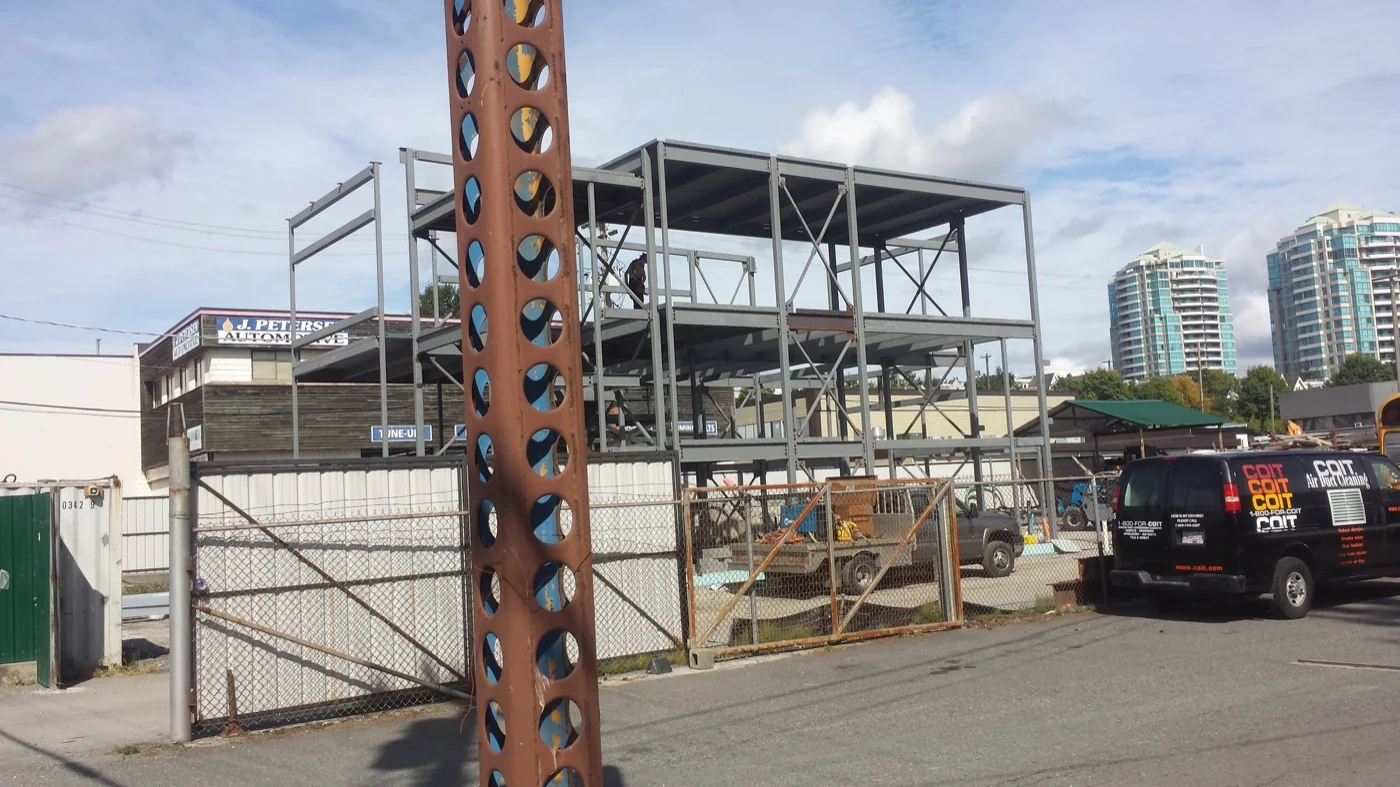
The structural steel photograph on this page comes from the SteelStud.ca archive. It is used to explain the construction setting behind the BuildersHaus network, not to claim that BuildersHaus fabricated or erected that frame. Keeping that distinction visible is part of good contractor marketing. Strong presentation and accurate attribution belong together, particularly when a network carries stories from several different businesses.
IAM / CONSTRUCTION MARKETING / 09
A page needs a clear next step that matches the stage of the customer. Some visitors want an estimate now; others need to understand whether the service fits. Offer enough information for both. The enquiry route should make it easy to identify the company, describe the work and provide contact details. It should also make clear who receives the message and what the visitor must do to send it.
Useful initial fields include the service, city, project type, desired timing and available drawings or photographs. Avoid making a visitor complete a full tender package before starting a conversation. Ask for the information that determines fit, then request more detail when needed. A small residential repair and a commercial interiors tender require different follow up. The form should reflect the audience rather than collect everything by default.
Named contractor content needs the correct performing business’s contact route. General network applications belong with IAM. Keep those paths distinct so a potential customer is not passed between unrelated inboxes. Where a telephone or email link is provided, verify the displayed details and destination. Where a form is intended to store and deliver submissions, test that complete process before describing it as working intake.
Attribution improves when the team records where a request came from and what happened next. Separate spam, unsuitable work, qualified opportunities, estimates and awarded jobs. If the source is unknown, record that honestly. A page view is not an estimate request, and an estimate request is not revenue. These distinctions help the contractor judge whether the campaign is attracting the right projects and whether the response process needs attention.
The IAM application section on this page currently opens an email draft for you to review and send. Opening that draft does not itself deliver an enquiry. It is a straightforward route for discussing your business while the agreed campaign scope is established. Any future connected intake should be verified through storage and the receiving inbox before it is treated as a completed lead delivery system.
IAM / CONSTRUCTION MARKETING / 10
Start with a practical review of the business, existing website and strongest available evidence. Identify the services and markets worth prioritising, the pages that already serve customers and the information that needs correction. The first plan should be manageable. A contractor does not need a campaign in every city to begin improving its presence; it needs a clear offer and a dependable process for presenting and following up on suitable work.
Agree the identity, initial service pages, project evidence, target area and enquiry destination. Confirm who approves technical content and photographs. Decide which specialist brand is relevant and what participation actually includes. Record the starting position so later reports can distinguish new work from material that was already live. This makes the first release concrete and gives the owner a useful way to review progress.
The release should be checked as a customer would use it. Read the page on a phone, open the image, follow the service link and try the enquiry route. Review headings, page titles, descriptions and the relationship to other pages. Correct broken or misleading elements before expanding the library. A polished campaign still depends on ordinary details such as a legible logo, accurate telephone number and link that goes to the right place.
Ongoing content can draw from active projects, completed work, customer questions, seasonal planning and changes in the service offer. The right frequency depends on the available evidence and review capacity. Publishing a helpful project explanation is more useful than meeting a daily target with repetitive material. An organised pipeline lets the team prepare assets early and publish when the facts and permissions are ready.
At each review, decide what to keep, improve, combine or retire. Update a service page when the business changes. Add an approved project when it strengthens the customer’s understanding. Review whether city coverage still matches operational reach. Contractor marketing becomes more effective as the information and response process improve together. The system should help the owner make those decisions, not create a growing backlog that nobody can maintain.
IAM / CONSTRUCTION MARKETING / 11
A contractor website should give visitors the essentials without making them wait through a complicated introduction. The business name, service, location context and next step need to be clear near the main heading. A prominent photograph can establish the construction setting, but it should not push all useful information out of reach. Keep motion purposeful and make sure the page remains understandable when an animation is paused or unavailable.
Important service information should be present in the published page, with clear links connecting related subjects. Review whether a visitor can reach the main services through ordinary navigation. Check that the correct page address is used consistently and that a page intended for discovery is not accidentally excluded. These checks do not guarantee indexing, but they remove avoidable confusion from the way the website presents its information.
Construction photography can be large, especially when supplied directly from a phone. Prepare appropriately sized versions so the website can show useful detail without sending unnecessary image data. Reserve space for images to reduce distracting layout movement. Describe meaningful photographs in alternative text, and use captions to identify their source and purpose. A logo needs a clean, high contrast setting rather than an oversized copy of a blurry promotional graphic.
On a phone, headings should remain readable, buttons should be comfortable to use and content should fit the screen. A three column desktop arrangement may need to become a simple stack. Check the real page rather than assuming a responsive template solves every issue. Pay particular attention to floating contact cards, menus and sticky elements that can cover the content or prevent a customer from reaching the enquiry section.
Prioritise a problem according to its effect. A broken estimate link or unreadable service page deserves attention before a cosmetic adjustment that changes nothing for the buyer. Record what was corrected and verify the result on the published site. If a technical limitation remains, make it visible in the work report so the contractor understands what is still outstanding and what the next release needs to address.
A lightweight publishing approach can make routine changes easier to review and maintain. It still requires careful implementation, suitable hosting and regular checks. IAM treats technical performance, accessible content and clear enquiry ownership as connected parts of the same service. The website should help people move from finding your company to understanding its work and making an informed request.
IAM / CONSTRUCTION MARKETING / 12
Approved IAM network participation starts from $10 a month. That entry point should be read alongside a written description of what is included. A separate one hub directory registration option is $10 USD a year. Those are different offers. Website creation, extensive content production, brand rights, multi site campaigns and ongoing management are separately scoped unless the agreement explicitly includes them. Clear pricing begins with a clear definition of the work.
When comparing agencies or network options, ask what will be built, where it will appear, who owns the content and how enquiries are routed. Ask whether images, technical changes, project articles and reporting are included. A headline monthly price cannot answer those questions on its own. IAM’s network approach is designed to give smaller businesses an accessible starting point, with further work matched to their needs and capacity.
Any territory or category arrangement must identify the specific IAM placement covered. It does not stop other companies appearing in search engines, advertising in the city or competing for customers. Similarly, access to a network brand does not automatically grant exclusive ownership of that brand or all its pages. Put these decisions in writing so the contractor understands what it is joining and how the relationship will work.
A useful proposal connects the business objective to identifiable work: improve a service page, publish approved projects, organise a market section or repair an enquiry route. Reporting should then show what was completed and what outcomes were actually observed. No responsible plan can promise a particular search position or a fixed number of AI citations. Results depend on competition, demand, execution and factors outside any one agency’s control.
Bring IAM your current website, preferred jobs, real service area and one project you are comfortable discussing. We can use that information to assess which construction brand and campaign scope fit. The aim is a practical relationship with clear responsibilities, recognisable branding and useful publishing. A small contractor should be able to understand the plan before committing to it and see the work that has been delivered afterwards.
IAM / CONSTRUCTION MARKETING / 13
Contractor marketing is the work of making a contracting business recognisable, explaining its services and helping suitable customers take the next step. It can include branding, a website, local search information, project stories and enquiry follow up. IAM combines those activities with a construction brand network, using an agreed scope that identifies the content, placements and contact routes included for the particular company.
The fundamentals are shared, but the information needs to match the trade and buying process. A contractor’s customers may need drawings, scope details, access information and project evidence before requesting an estimate. The campaign should reflect actual service areas and capacity. Useful contractor SEO makes those details easier to find while keeping the business identity, project attribution and next step clear.
No. Begin with the markets you can genuinely serve and the information you can make useful for people there. A city page should offer more than a changed place name. It may explain available services, estimate arrangements, project types and relevant evidence. If there is not enough distinct information to justify a separate page, a broader service area explanation may be more helpful.
The starting review should establish what your current website does well and what needs improvement. A complete rebuild is not automatically the right answer. Depending on the agreed scope, the work may focus on service information, project content, branding, technical fixes or enquiry routes. Existing content and ownership need to be understood before deciding which changes offer the most practical value.
A named business’s project content should identify that business and use its agreed contact route. General network applications are separate. The campaign should record enquiry ownership before publishing so the customer reaches the appropriate company. IAM’s construction hub and specialist brands provide context for the work; they should not obscure the identity of the contractor responsible for it.
No. Publishing, indexing, search exposure, enquiries and awarded work are different stages. IAM can agree and report on the work it undertakes, but cannot guarantee the decisions of a search platform or a customer. The objective is to build a useful, coherent presence and improve it with evidence. Any commercial forecast should make its assumptions and limitations clear.
Get In Touch
Bring your trade, city, website and one project you can share. We’ll discuss the right construction brand, content plan and written scope.
Address
3645 Kingsway, Vancouver, BC V5R 5M1, Canada