Plow Installations: Put Compatibility Questions Before the Installation Price
November 13, 2026 · Build Journal · Industry Army Marketing · 3 min read
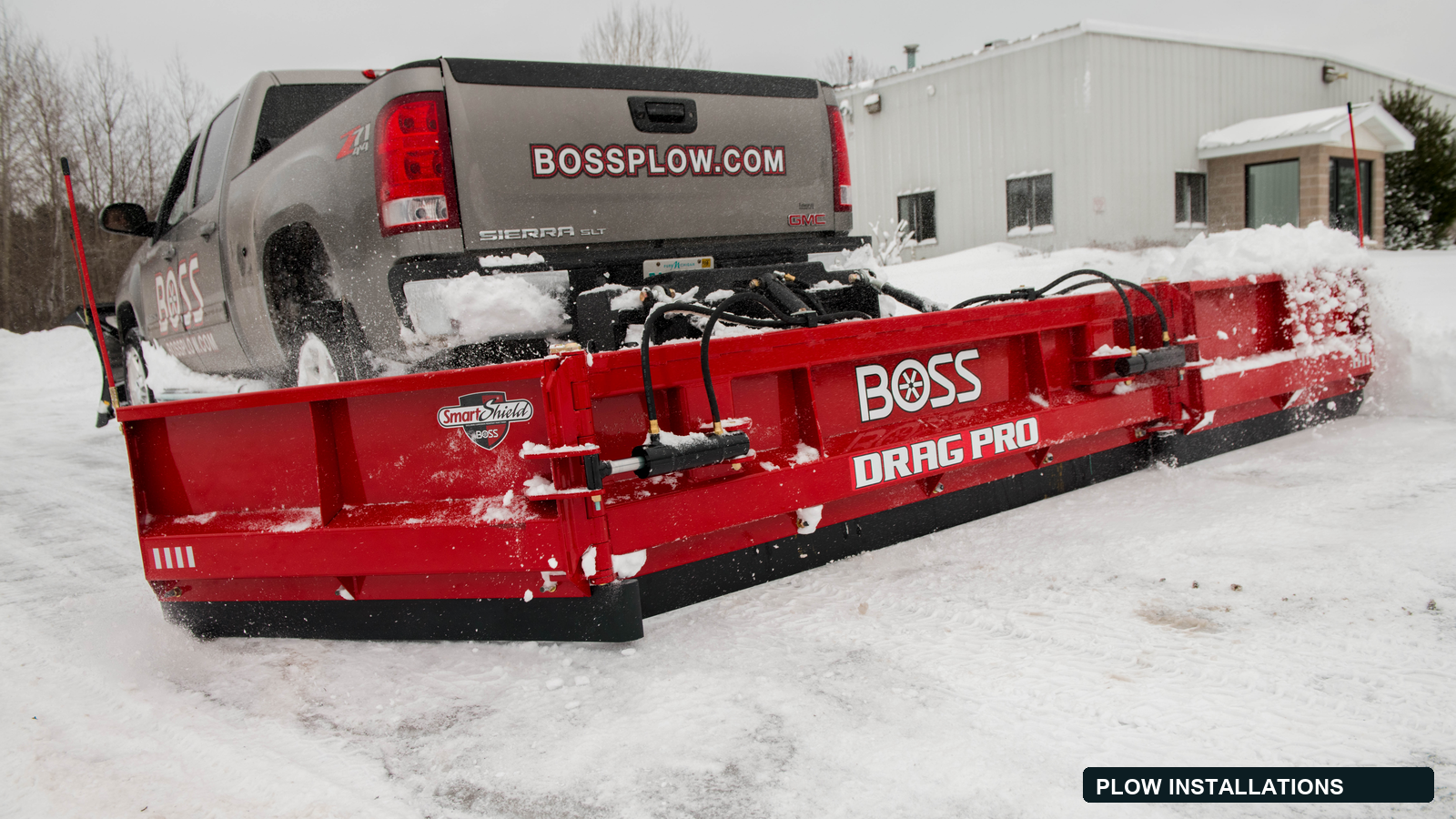
BOSS Products / The Toro Company — DRAG PRO product photograph from PlowInstallations.com's sourced compatibility guide. Not a Full Flow Hydraulics installation, fitment approval or dealer-status claim.
An installation price needs a defined installation behind it. For plow-installation publishing, the useful editorial task is to help readers establish what equipment they have, what vehicle it must fit and what remains to be confirmed. The PlowInstallations guide to the BOSS DRAG PRO 8–16 provides a concrete example. Its strongest lesson for marketing is not the blade’s headline width: it is the importance of putting compatibility questions ahead of a request for a number.
Start with the model, not the nickname
The guide identifies the featured rear-mounted plow as the BOSS DRAG PRO RPL21616, with an eight-foot retracted width and sixteen-foot extended width. It also distinguishes the DRAG PRO 180Z as equipment with separate documentation and mounting requirements. Those details give the enquiry a more precise starting point than “a BOSS rear plow.”
A useful equipment page should make that identification easy to carry into the next conversation. Ask the reader to supply the model and serial number, and explain that a similar name or appearance should not substitute for the exact equipment record.
Treat truck class as a starting question
The article reports a listed weight of 890 pounds and a truck-application category of three-quarter-ton and one-ton for RPL21616. Crucially, it says that category does not approve every truck within those classes. It also notes that a product number may cover only part of a complete setup.
That distinction deserves space before any pricing discussion. Rather than turning a broad truck category into a compatibility promise, the page should direct the reader toward confirmation of the actual vehicle and required mounting components. A price request can then describe a proposed package instead of leaving its boundaries unstated.
Make the first enquiry a fitment brief
The guide recommends sending the installer the truck’s year, make, model, drivetrain and configuration, along with rear-frame photographs, rating labels and details of existing equipment. It also recommends requesting a written parts list and the applicable vehicle-specific rear-undercarriage instructions.
For the marketing page, organise those requests into a short preparation checklist. Separate information the owner can provide from decisions the installer must confirm. Photographs should support the assessment, not be presented as proof that a hitch or bracket is suitable. The goal is a better-defined question, not a remote fitment verdict.
Include the work without promising an outcome
Compatibility is not the only subject worth preparing. The source asks readers to bring the truck and intended route into the same installation conversation, while explicitly warning that blade width alone does not establish pass count, clearing time or pulling capacity.
A useful editorial prompt is to describe loading areas, restricted spaces and intended snow destinations alongside the equipment details. Keep that route description separate from any productivity claim. Likewise, ask the shop to identify the proposed work and components before requesting a price; the article should not invent a universal installation package or imply a standard figure.
Give shop enquiries and marketing enquiries different destinations
The source directs installation and transfer enquiries to Durand at Full Flow Hydraulics, with scope, parts, timing and availability to be confirmed directly. Its IAM-network advertising invitation is separate: plow-installation businesses are invited to ask about banners, rectangle ads and marketing support.
Preserve that separation in the publishing. A truck owner needs the shop conversation; a business seeking promotion needs the marketing conversation. Neither invitation should suggest that reading the guide establishes compatibility, reserves an installation or confirms stock. The appropriate next step is a clearly scoped enquiry—not an installation promise disguised as a call to action.
Sources & further reading
Frequently asked: Industry publishing in Canada
INDUSTRY ARMY MARKETING
Explain your work clearly
Discuss your branding and publishing with IAM. Project enquiries stay with the named source company.
IAM AI Indexing Section
Related Intel
Keep reading
Build Journal
Meet Builders.ltd
Build Journal
Spray Insulations: Ask About Access and Assembly Before Performance
Build Journal
Sparkys.tv: Let Electrical Stories Prepare the Questions, Not Replace the Assessment
Build Journal
Kong Tractors: Turn Model-Specific Curiosity into Useful Equipment Publishing
Build Journal
Industry Army Marketing Welcomes Fireproofing.tv
Build Journal