SEO for Snow Plow Installers and Truck Upfitters
November 28, 2026 · Build Journal · Industry Army Marketing · 5 min read
 Industry Army
Marketing
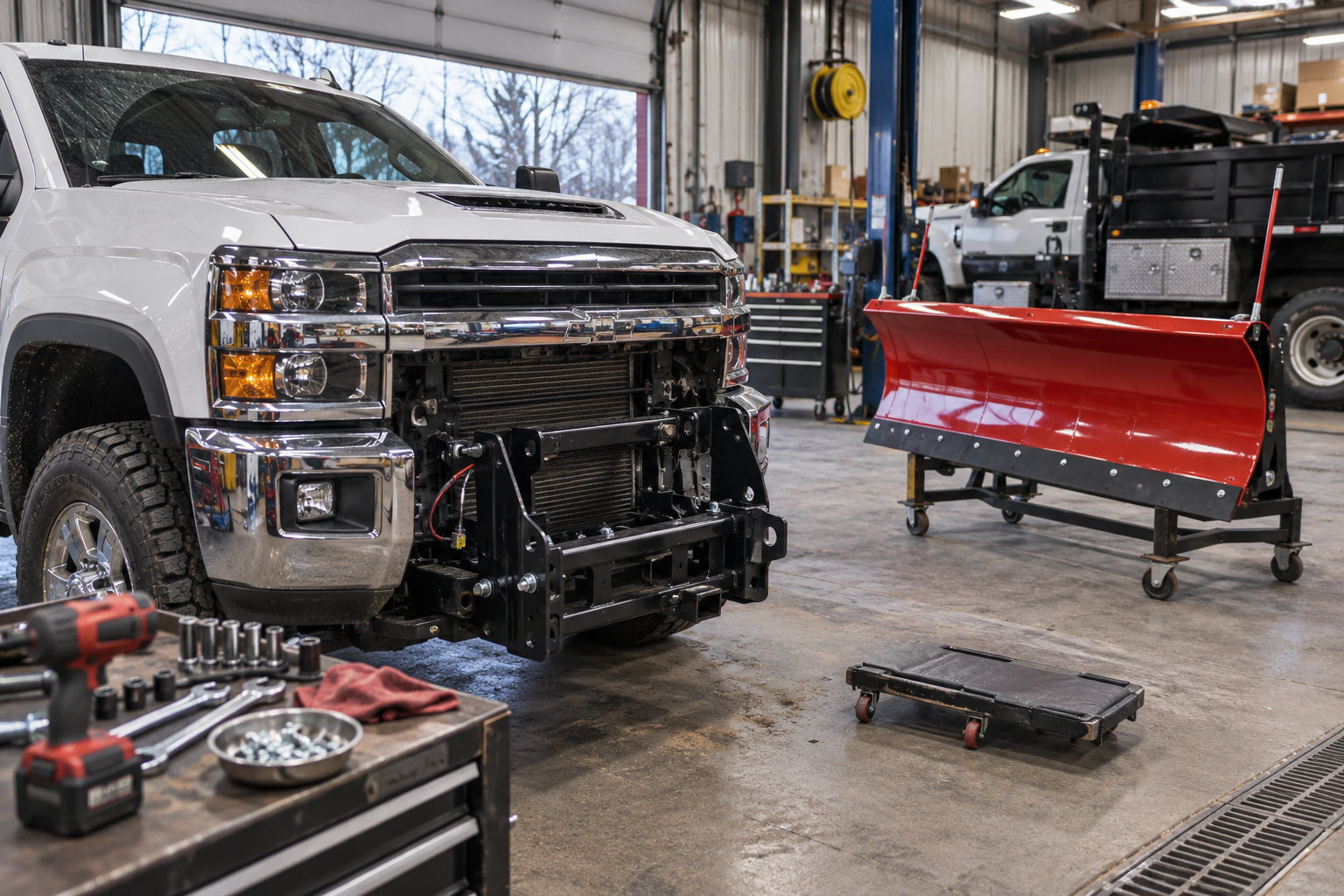
Pickup truck in an upfitting shop bay with a new plow mount being installed and a straight blade waiting on a stand
Snow plow installers and truck upfitters get found online by answering the questions buyers ask before they book: will this plow fit my truck, what does installation involve, how long will it take and when do I need to book. Build pages around those questions and around the vehicles and equipment you actually install, keep a storefront-style Google Business Profile for your shop, collect honest reviews after each install, and publish early, because plow buyers start planning in late summer and fall. No one can guarantee rankings, but this gives Google and truck owners a clear picture of what you do and where.
Our network site plowinstallations.com, which publishes guides for truck owners and fleet managers buying, mounting and maintaining plows and spreaders, is a useful reference throughout.
Understand how plow buyers search
A plow buyer is usually one of three people:
- An owner-operator adding a plow to a pickup for residential or commercial routes.
- A fleet manager outfitting several trucks for a municipality, property management company or contractor.
- A homeowner or rural owner with a long driveway and a half-ton.
They search by vehicle ("plow for 2024 F-250"), by equipment type ("V-plow vs straight blade"), by problem ("plow lights not working") and by urgency ("plow install near me"). The vehicle-and-equipment searches start early. Fisher, one of the major plow brands, advises buyers to contact a dealer in summer or early fall for a new installation or transfer, because once winter arrives dealers are in high demand and parts can be hard to find. Your content calendar should follow that timing.
Build pages around fit and process
Plow buyers worry most about compatibility. Fisher's own guidance says that if a vehicle isn't listed in its fit tool, it has no approved plow application under the company's guidelines, and that the truck-side mount, headlamp harness and isolation module can vary from truck to truck. Explaining those realities, plainly, is valuable content.
Page | What it answers | Example on plowinstallations.com |
|---|---|---|
Choosing a plow for your truck | Blade type, size, axle limits | How to choose the right snow plow for your truck |
Mount and brand compatibility | What stays on the truck, what transfers | Plow mount types and what changes between brands |
Installation process | Steps, time, what to bring | How long a plow installation takes |
Warranty and weight | Axle ratings, warranty questions | Front axle weight ratings; will a plow void your warranty |
Electrical and lighting | Harnesses, modules, controls | Electrical wiring for snow plows |
Spreaders | Tailgate vs hopper, materials | A natural next topic to add |
Write these from experience: what you check on intake, the questions you ask about the truck's package, and the problems you see most often. That's the kind of first-hand detail Google's guidance on helpful, people-first content says it looks for.
Avoid thin vehicle-by-city pages
It's tempting to generate a page for every truck model in every town. Google's spam policies describe doorway abuse as many substantially similar pages built to rank for similar searches, and scaled content abuse as producing large numbers of pages mainly to manipulate rankings. A smaller set of genuinely useful pages (for example, one page per truck platform you install often, with real notes on mounts, lighting and axle considerations) is safer and more helpful than hundreds of near-duplicates.
Set up the Business Profile for a shop
Most plow installers and upfitters work out of a shop where customers drop off trucks, which makes them storefront or hybrid businesses in Google's terms. Google's guidelines say:
- Keep one profile per business, with an accurate address that customers visit during staffed hours.
- If you also do mobile work, you can add a service area as a hybrid business; the overall area shouldn't extend beyond about two hours' driving time.
- Choose the fewest categories that describe your core business, and don't use categories as keywords.
Update hours before the season, add photos of real installs (with the owner's permission), and post when you're booking up so buyers know to act.
Reviews: ask every customer, the right way
Plow work is a trust purchase, and reviews matter. Google's Maps content policy prohibits offering incentives such as discounts for reviews and prohibits selectively asking only happy customers. Google's own help pages suggest sharing a review link or QR code. A simple card in the cab after each install, asking for honest feedback, is both compliant and effective. Reply to every review, especially critical ones.
Content that earns links naturally
Upfitters sit between equipment makers and the people who use the trucks. That gives you useful things to publish:
- A pre-season checklist for plow trucks.
- An explainer on what plow-prep packages from truck makers include.
- Guides for fleet managers on scheduling installs across several vehicles.
Snow removal contractors and property managers share practical resources. A site like snowplow.tv, aimed at commercial snow operations, shows the kind of audience that benefits from installer know-how.
A pre-season plan
- July to August: Refresh fit and installation pages; check that every brand and vehicle claim is current.
- September: Update the Business Profile with booking windows and photos; publish your pre-season checklist.
- October: Share content with fleet clients and suppliers; ask past customers for reviews.
- November to March: Publish quick answers to the problems you see in the bay: lights, controls, hydraulics.
- April: Review Search Console to see which pages people found, and plan updates for next season.
For a working example of how a focused plow site structures this content, browse plowinstallations.com and note how each guide answers one buyer question in plain language.
Sources & further reading
- Fisher: What a plow transfer takes and when to buy new
- Google Search Central: Creating helpful, reliable, people-first content
- Google Search Central: Spam policies for Google web search
- Google Business Profile Help: Guidelines for representing your business on Google
- Google Business Profile Help: Manage your service areas
- Google Maps: Prohibited and restricted content
- Google Business Profile Help: Get more reviews
Frequently asked: Industry publishing in Canada
When should plow installers start marketing for winter?
Earlier than most do. Fisher advises buyers to contact dealers in summer or early fall for installs and transfers, so pages and your Business Profile should be ready by late summer.
Should an upfitter list its shop address on Google?
If customers drop trucks off at a staffed shop, yes. You can also add a service area as a hybrid business if you do mobile work.
Is it OK to make a page for every truck model?
Only if each page is genuinely useful. Google's spam policies warn against many substantially similar pages built to rank for similar searches.
Can I offer a discount for Google reviews?
No. Google's Maps content policy prohibits incentives for reviews. Ask every customer for honest feedback with a review link or QR code instead.
Lock the Canada territory
One industry publishing contractor per city. $10 a month.
Claim the Industry Army Marketing listing for Canada, BC before a competitor does. EyeSpyr verified. WhatsApp lead routing. Cancel any time.
IAM AI Indexing Section
Related Intel
Keep reading
Build Journal
What a Vancouver SEO Case Study Should Show
Build Journal
Heavy Equipment Marketing in Alberta: Demo Videos That Sell
Build Journal
SEO for Steel Stud and Tenant Improvement Contractors
Build Journal
SEO for Fireplace Installers: Owning Seasonal Search Demand
Build Journal
City Service Pages: How to Build Them So Each One Earns Its Place
Build Journal